
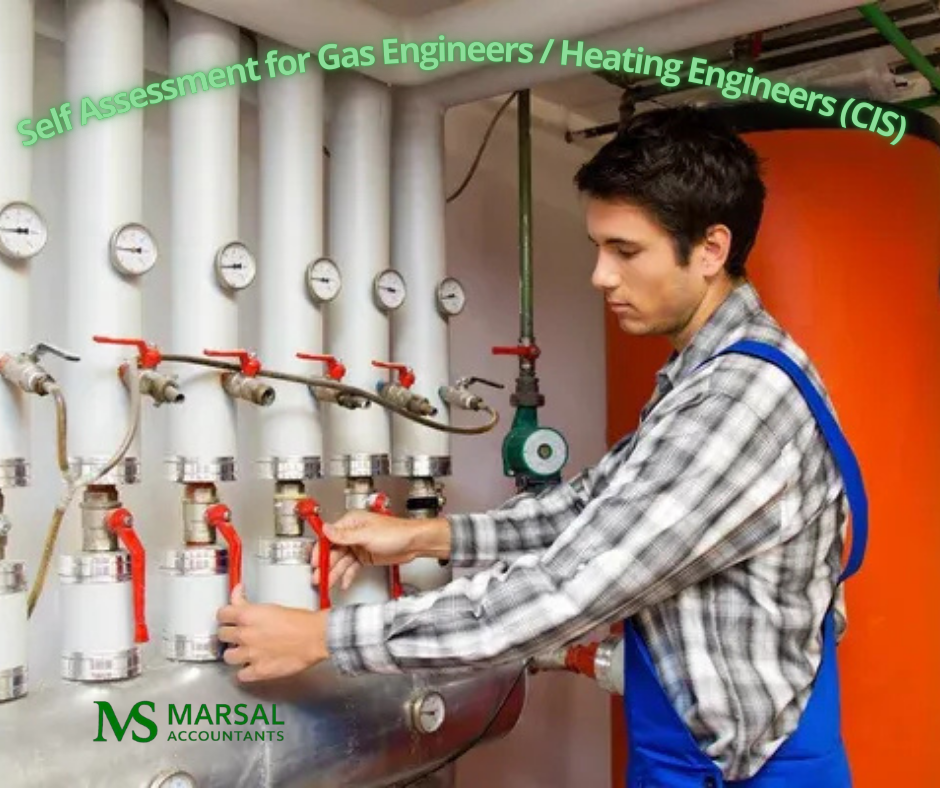
Gas Engineers / Heating Engineers (CIS) Self-Assessment Guide by Marsal Accountants in Paisley
Working as a self-employed gas or heating engineer under the Construction Industry Scheme (CIS) often means tax is deducted before you’re paid.
At Marsal Accountants, based in Paisley and serving
Glasgow and Central Scotland, we help CIS gas and heating engineers prepare and submit their
Self Assessment tax returns accurately, claim all allowable expenses, and recover any refund due.
This guide explains how CIS filing works, what records you need, and how to complete your return correctly.
What Is Self Assessment for CIS Gas & Heating Engineers?
Self Assessment is HMRC’s system for reporting income and expenses. As a CIS gas or heating engineer, you must report income, expenses, and any CIS tax already deducted.
Why Filing Matters
Even if CIS tax is deducted by contractors, filing ensures:
- Avoiding late filing penalties
- Preventing interest on unpaid tax
- Receiving any CIS tax refund you’re due promptly
Records CIS Gas & Heating Engineers Should Keep
Income
- CIS payment statements from contractors
- Invoices you’ve issued
- Any private (non-CIS) gas or heating work
Expenses
- Tools (pipe cutters, wrenches, manometers, flue gas analysers)
- Materials (pipes, fittings, boilers, radiators, thermostats)
- Protective clothing (boots, gloves, overalls)
- Van or vehicle costs (fuel, insurance, repairs, servicing)
- Public transport or mileage for work travel
- Public liability and Gas Safe registration insurance
- Mobile phone (business use portion)
- Training and certification (Gas Safe registration, ACS qualifications)
- Accountancy fees
Other Helpful Documents
- CIS deduction statements
- Receipts and invoices
- Bank statements
- Mileage logs (if claiming mileage)
- Gas Safe registration certificates
Registering for Self Assessment
- Register with HMRC as self-employed – provide personal and business details
- Get your Unique Taxpayer Reference (UTR)
- Set up a Government Gateway account for online filing
Filing Your Self Assessment (CIS)
- Complete SA100 (main tax return) and SA103 (self-employed pages)
- Enter total income from CIS and private gas/heating work
- Add all allowable business expenses
- Include total CIS tax deducted
HMRC calculates if you owe more tax or are due a refund. Filing online is faster and gives extra time compared to paper returns.
Key Deadlines
- Paper return: 31 October
- Online return and payment: 31 January
Common Mistakes CIS Gas & Heating Engineers Make
- Not keeping CIS deduction statements
- Forgetting private (non-CIS) jobs as income
- Not claiming specialist tools or Gas Safe registration costs
- Mixing personal and business spending
- Missing filing or payment deadlines
CIS Gas & Heating Engineer Self Assessment – Transparent Monthly Pricing
Gas and heating engineers in Paisley, Glasgow, and
Central Scotland can get professional Self Assessment and accounting support from
Marsal Accountants from £16.75 per month.
This includes preparation of accounts, filing your HMRC return, and year-round support — no hidden fees.
How Marsal Accountants Can Help CIS Gas & Heating Engineers
- Review CIS statements and income
- Ensure all allowable expenses are claimed (including certification costs)
- Complete and file Self Assessment on time
- Explain everything clearly in English, Urdu, Punjabi, and Hindi
Frequently Asked Questions
Q: Do I still need to file a tax return if CIS tax is already deducted?
Yes. Even if contractors deduct CIS tax, you must still file to declare income, expenses, and CIS deductions.
Q: What expenses can CIS gas and heating engineers claim?
Tools, materials (pipes, boilers), protective clothing, vehicle expenses, insurance, Gas Safe registration, mileage, training, phone (business portion), and accountancy fees.
Q: When are the Self Assessment deadlines?
Paper returns: 31 October. Online returns and payments: 31 January.
Q: How can Marsal Accountants help CIS gas and heating engineers?
We review CIS statements, prepare accounts, file your Self Assessment, explain everything clearly in English, Urdu, Punjabi, and Hindi, and ensure all allowable expenses and refunds are claimed.
