
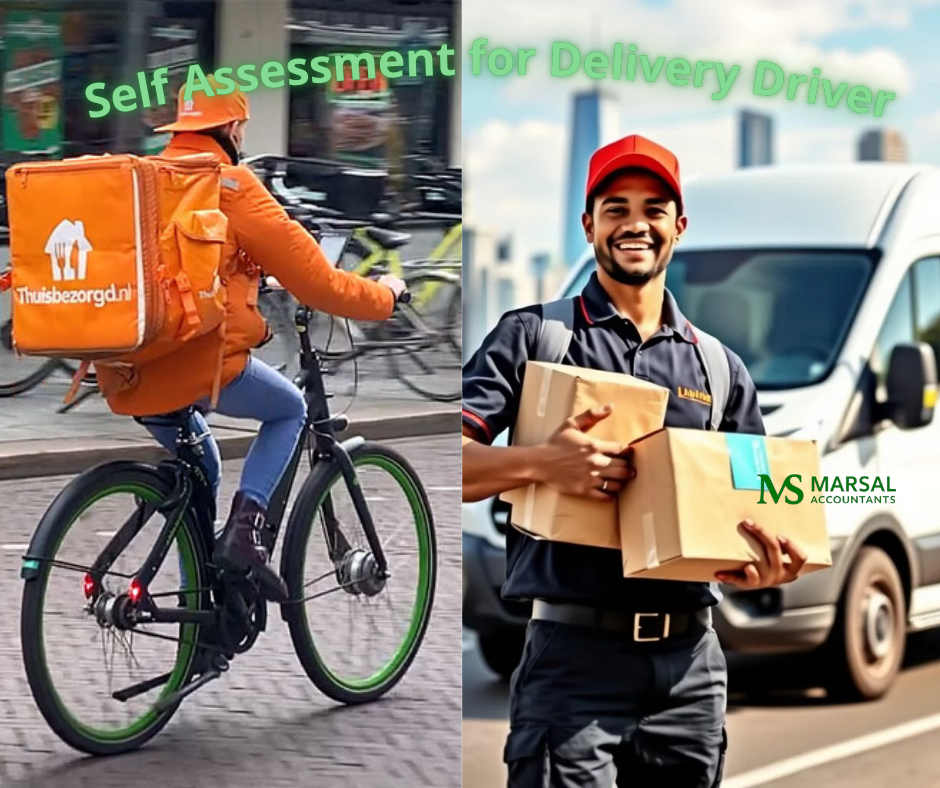
Delivery Driver Self-Assessment Guide by Marsal Accountants in Paisley
Working as a self-employed delivery driver for platforms like Uber Eats,
Just Eat, and Deliveroo offers flexibility—but it also comes with tax responsibilities.
At Marsal Accountants, based in Paisley and serving
Glasgow and Central Scotland, we help delivery drivers prepare and submit their
Self Assessment tax returns accurately and on time.
This step-by-step guide explains what Self Assessment is, the records you need, and how professional support can save you time, money, and stress.
What Is Self Assessment for Delivery Drivers?
Self Assessment is HMRC’s system for reporting income and expenses if you’re self-employed.
Delivery drivers are responsible for completing their annual tax return to ensure they pay the correct amount of tax.
Why Filing Matters
Failing to file on time can lead to:
- Late filing penalties
- Interest on unpaid tax
- Complications with HMRC that could affect your work
Filing correctly ensures you claim all allowable expenses and only pay what you owe.
Records Delivery Drivers Should Keep
Income Records
- Delivery fees (base pay)
- Boosts, incentives, and bonuses
- Cash and card tips
Allowable Expenses
- Fuel (for car or motorbike)
- Vehicle or bike insurance
- Repairs, servicing, tyres, chain, brakes
- Protective gear and delivery bags
- Business-use portion of phone and data plan
- Parking, tolls, congestion charges
- Cycle maintenance and parts (if applicable)
Other Supporting Documents
- Receipts and invoices
- Mileage or journey logs
- Bank statements (including platform payouts)
Mileage vs Actual Costs
You can usually choose between claiming mileage (fixed rate per business mile)
or actual costs (fuel, repairs, insurance, etc.). Pick the method that gives the best legitimate deduction and keep consistent records.
Registering for Self Assessment
- Register with HMRC – Provide personal and business details.
- Get your Unique Taxpayer Reference (UTR) – A 10-digit number for your tax account.
- Set up a Government Gateway account – Required for online filing.
Filing Your Self Assessment Return
Most delivery drivers complete the SA100 (main tax return) and SA103 (self-employed pages).
- Enter all income from deliveries, incentives, and tips
- Claim all allowable business expenses
- HMRC calculates your tax automatically
Filing online is faster and gives you extra time compared to paper submissions.
Key Deadlines to Remember
- Paper return: 31 October
- Online return: 31 January
- Tax payment: 31 January
Common Mistakes Delivery Drivers Make
- Forgetting to include cash tips
- Not claiming mileage or under-claiming expenses
- Mixing personal and business costs
- Leaving filing until the last minute
Delivery Driver Self Assessment – Clear Monthly Pricing
Most delivery drivers in Paisley, Glasgow, and
Central Scotland pay from £16.75 per month for professional
Self Assessment and accounting support from Marsal Accountants.
This includes preparation of your accounts, filing your HMRC return, and ongoing support — with no hidden fees.
How Marsal Accountants Can Help Delivery Drivers
Marsal Accountants support delivery drivers across Paisley, Glasgow, and Central Scotland
with reliable, clear, and affordable accounting services.
- Preparation of accurate accounts
- On-time Self Assessment filing
- Clear advice in English, Urdu, Punjabi, and Hindi
- Maximising allowable expenses, including mileage or actual costs
Frequently Asked Questions
Q: Do delivery drivers need to include cash tips as income?
Yes, all tips—cash and card—must be declared as income on your tax return.
Q: Can I claim mileage instead of actual fuel and repair costs?
Usually yes. Track your journeys carefully and choose the method that gives the best legitimate deduction.
Q: What expenses can delivery drivers claim?
Fuel, insurance, vehicle or bike maintenance, delivery bags, phone/data (business portion), parking, tolls, congestion charges, and protective gear.
Q: When are the Self Assessment deadlines?
Paper returns: 31 October. Online returns and tax payments: 31 January.
